Is exercise good for rheumatoid arthritis?
Yes. In 2022 the American College of Rheumatology (ACR) published its first guideline on exercise, rehabilitation, diet and other integrative approaches for RA, to be used alongside medicines. Of its 28 recommendations, only one is strong: regular, ongoing exercise is recommended over no exercise. The panel based it on evidence that exercise helps physical function and pain.
The same guideline conditionally recommends four types of exercise: aerobic exercise, resistance (strength) exercise, water-based (aquatic) exercise, and mind-body exercise such as yoga, tai chi and qigong. "Conditional" means the benefit is likely, but the best choice depends on you. There is no single right workout. The one you will keep doing is the one that works.
Exercise also helps with two problems that come with RA. A Cochrane review (2013) found that physical activity programs gave a small but real drop in the fatigue many people with RA live with. And the NHS notes that people with RA have a higher risk of heart and blood vessel disease. Regular aerobic activity is one of the ways to look after your heart, along with the care your doctor gives.
Can you exercise during a rheumatoid arthritis flare?
You can usually keep moving during a flare, but you need to change what you do. A flare is when the disease gets more active: joints become hot, swollen and very painful, and you may feel unwell and exhausted. The NHS advises plenty of rest during a flare-up. Rest makes inflamed joints more comfortable, but without any movement your joints stiffen and your muscles weaken.
So during a flare, the aim is to keep joints moving, not to train them. Gently move each sore joint through its comfortable range a few times a day, with no weights and no bands. Keep the rest of your body active if you can, for example with short, easy walks or seated exercises for joints that are not flaring. Skip strength training for the affected joints until the swelling settles.
- During a flare: gentle range-of-motion moves, short easy walks, rest breaks.
- If an activity makes your joints warm and swollen, or causes severe pain, the NHS advises you to stop and rest.
- As the flare settles: go back to your usual routine at a lower level, then build up gradually over the following weeks.
- In remission or low disease activity: aim for the full plan, with aerobic, strength and flexibility work each week.
- If one activity always sets off a flare, the NHS suggests dropping it and finding an alternative.
- A flare that does not settle, or new swelling in a joint, is a reason to call your rheumatology team.
How much exercise should you do with rheumatoid arthritis?
The CDC recommends that adults with arthritis aim for at least 150 minutes a week of moderate aerobic activity, plus muscle-strengthening activity on at least 2 days a week. Older adults should add balance work. That target can feel far away with RA, and that is fine. The CDC notes that just 5 or 10 minutes at a time is beneficial, so short bouts count.
Moderate means you can talk but not sing. If you can only get out a word or two at a time, slow down. Some extra soreness or stiffness after a new activity is normal. The American College of Rheumatology's advice for patients is simple: if your symptoms get worse, use less resistance or take longer breaks between workouts. If the flare-up of symptoms keeps happening, ask a physical therapist to help adjust your program, rather than stopping exercise completely.
- Morning stiffness in RA often lasts more than 30 minutes. Many people find it easier to exercise later in the day, or after a warm shower.
- Use pacing, which the ACR guideline also recommends: split activity into smaller chunks, take planned rests, and plan your hardest tasks for your best time of day.
- On low-energy days, do a shorter version of your plan instead of nothing. Ten minutes of gentle movement keeps the habit going.
Best exercises for rheumatoid arthritis, including pilates, yoga and water exercise
A good weekly plan mixes four things: aerobic exercise for your heart and energy, strength work to protect your joints, flexibility for range of motion, and balance. Choose low-impact options, which put less load on sore feet, knees and wrists.
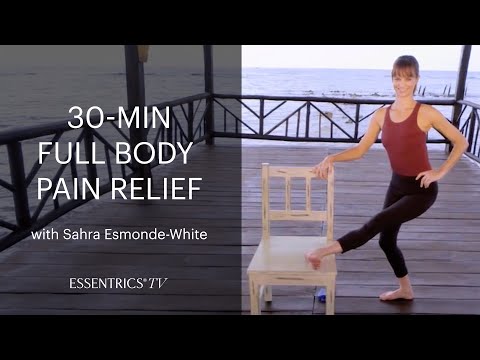
Pilates is a good fit for many people with RA. The ACR guideline lists pilates as one example of resistance exercise. Start with mat or chair-based classes for beginners, and ask the teacher to adapt any move that loads your wrists, such as planks or kneeling on all fours.
- Aerobic: walking, a stationary bike, an elliptical trainer or swimming. Shock-absorbing shoes help if RA affects your feet.
- Water exercise: warm water eases stiffness and supports your weight, so you can move joints that hurt on land. Water aerobics and walking in the pool both count.
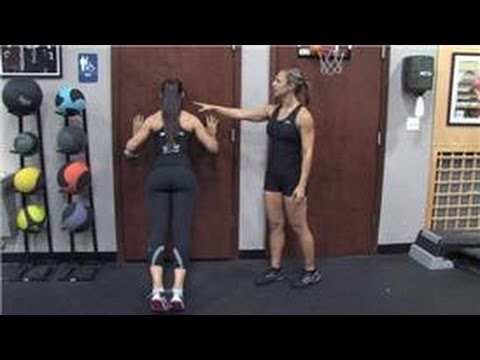
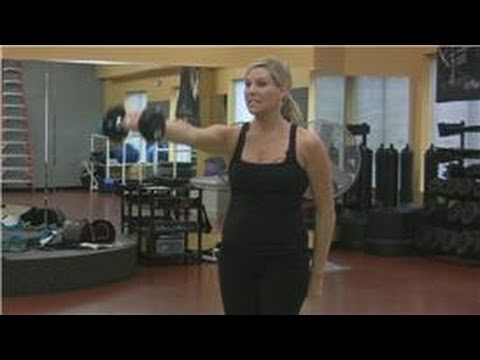
- Strength: resistance bands, light dumbbells or body weight. The CDC advises choosing weights or bands that do not cause joint pain. Start light and focus on slow, controlled moves. Sit-to-stands, wall push-ups and band rows are good starters.
- Yoga, tai chi and qigong: gentle movement, breathing and balance in one. Choose classes labeled gentle, chair or beginner.
- Flexibility: slow, gentle stretches held for a few easy breaths, without bouncing, after you are warm.
Hand and wrist exercises for rheumatoid arthritis
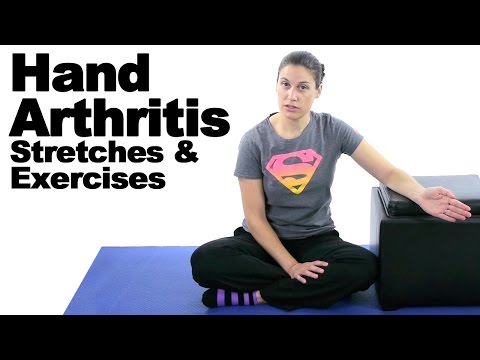
Hands and wrists are where RA often starts, and sore hands make daily tasks like opening jars or doing buttons hard. Hand exercises help. In the SARAH trial (The Lancet, 2015), 490 adults with RA who had painful, stiff hands were given usual care, or usual care plus a tailored stretching and strengthening program taught by a physical or occupational therapist and done at home. A year later, the exercise group had better hand function than the usual care group. Pain stayed steady in both groups, and no serious side effects were linked to the exercises.
The ACR guideline conditionally recommends hand therapy exercises for people with RA in their hands. It also supports splints, braces or compression gloves for hand and wrist problems, and joint protection techniques. A hand therapist can tailor a program to your joints, and is worth asking your rheumatologist about.
- Gentle fist: slowly curl your fingers into a loose fist, then straighten them fully. Repeat 5 to 10 times.
- Finger spread: lay your hand flat on a table and spread your fingers wide, then bring them together.
- Thumb touches: touch your thumb to the tip of each finger in turn, making an "O" shape.
- Wrist bends: rest your forearm on a table with the hand over the edge, and gently bend the wrist up and down.
- Grip strength, once a flare has settled: squeeze a soft foam ball or putty for a few seconds, then relax.
- Warm water or a warm towel before hand exercises can make them easier. Move within a comfortable range and never force a joint.
Protecting your joints and neck when you exercise with RA
Joint protection means doing tasks in ways that spread the load over larger or stronger joints. For exercise, that means holding weights with a flat palm or using cuff weights and bands looped around the forearm, instead of a tight grip. Push up from a chair with your forearms or palms, not your knuckles.
Take extra care with your neck if you have had RA for many years. The NHS notes that RA raises the risk of a problem at the top of the spine called cervical myelopathy, where joints at the top of the spine can slip out of place and press on the spinal cord. It is uncommon but serious. Until your doctor says otherwise, avoid headstands, shoulder stands, plough pose, forced neck rolls and exercises that pull on your head. Tell your doctor promptly about neck pain with tingling, numbness or weakness in your arms or hands, or new clumsiness.
- Avoid high-impact moves such as jumping and running on hard ground when your feet, knees or ankles are active.
- Swap planks and push-ups on the floor for wall push-ups or forearm versions if your wrists hurt.
- Numbness and tingling in the thumb and fingers can be carpal tunnel syndrome, which is common with RA. Mention it to your doctor.
- If you have joint damage or have had joint surgery, ask a physical therapist which moves to change.
How to start exercising with rheumatoid arthritis
Start lower than you think you need to, and increase one thing at a time: first how often, then how long, then how hard. Keep a simple log of what you did and how your joints felt the next day. It shows you what works and helps your rheumatology team.
The ACR guideline also conditionally recommends physical and occupational therapy. A therapist can check your joints and build a plan around them. If you want a ready-made plan to follow at home, VitalStep can build a personalized, low-impact weekly plan with videos that you can scale back on flare days.
- Weeks 1-2: 10 minutes of walking, cycling or pool exercise on 3 days, plus daily hand and range-of-motion moves.
- Weeks 3-4: 15 to 20 minutes on 3 to 4 days. Add 1 strength session with bands or body weight.
- Weeks 5-8: build toward 30 minutes on most days and 2 strength sessions a week. Add a pilates, yoga or tai chi class if you enjoy it.
When to stop exercising and get help
Stop right away and contact your doctor, or call emergency services if symptoms are severe, if you notice:
- Chest pain, pressure or tightness, or breathlessness that does not settle with rest (call emergency services if it does not ease quickly)
- A joint that becomes hot, red and swollen during or after exercise
- Sharp or severe joint pain, or pain that is much worse than usual after exercise and does not settle with rest
- Neck pain with tingling, numbness or weakness in your arms or hands, or new clumsiness or trouble walking
- Dizziness, feeling faint, or a racing or irregular heartbeat
- A joint that suddenly feels unstable, gives way, or locks
- Fever or feeling generally unwell, especially if you take medicines that lower your immunity
Sample beginner week
An example to show how a balanced week can look. Adjust it to your energy, symptoms and your clinician's advice, or let VitalStep build one around your schedule.
| Day | Activity | Time | Intensity |
|---|---|---|---|
| Monday | Walk or stationary bike + hand exercises | 20-30 min | Moderate (RPE 3-4/10) |
| Tuesday | Strength with bands (sit-to-stands, band rows, wall push-ups) | 20 min | Moderate (RPE 3-5/10) |
| Wednesday | Water aerobics or pool walking | 30 min | Light to moderate (RPE 2-4/10) |
| Thursday | Gentle range-of-motion and hand exercises | 10-15 min | Very light (1-2/10) |
| Friday | Beginner pilates (mat or chair) + light strength | 25-30 min | Moderate (RPE 3-4/10) |
| Saturday | Walk or bike in 2 shorter bouts | 20-30 min | Moderate (RPE 3-4/10) |
| Sunday | Rest, or gentle yoga or tai chi | 0-20 min | Very light (1-2/10) |