Is exercise good for heart failure?
Yes. The 2022 AHA/ACC/HFSA heart failure guideline recommends exercise training, or regular physical activity, for people with heart failure who are able to take part, to improve their ability to do things and their quality of life. It also supports referral to cardiac rehabilitation.
The largest trial, HF-ACTION (JAMA, 2009), followed more than 2,300 people with HFrEF. Exercise training was safe, and after adjusting for other risk factors it was linked with a modest drop in deaths and hospital stays. A Cochrane review (2019) of 44 trials found that exercise-based cardiac rehab reduces hospital admissions, including admissions for heart failure, and improves quality of life.
The benefit comes from the body more than the heart: muscles, blood vessels and breathing get more efficient, so the same task takes less effort. That is why people often notice they can walk or climb stairs more easily after a few weeks.
Cardiac rehab for heart failure, and cardiac rehab at home
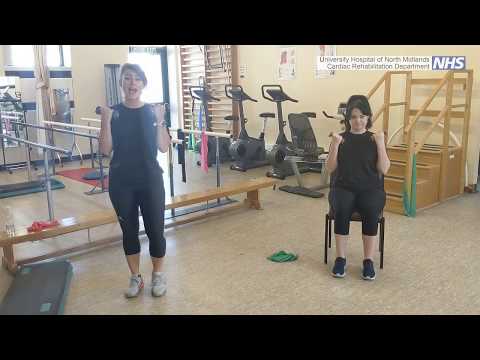
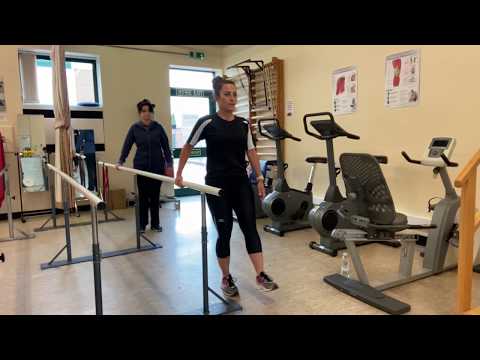
Cardiac rehabilitation is a supervised program of exercise, education and support, usually 2 to 3 sessions a week for about 12 weeks. Staff check your symptoms, blood pressure and heart rhythm while you exercise and set your starting level. It is the safest way to begin, especially if you have been very inactive or recently in hospital.
In the United States, Medicare covers cardiac rehab for stable chronic heart failure with an ejection fraction of 35% or less (NYHA class II to IV) after at least 6 weeks on stable treatment. In the UK, the NHS offers cardiac rehab to people with heart failure. Ask your heart team for a referral; you usually need one.
Many programs now offer home-based or hybrid rehab, with a plan, phone or video check-ins, and sometimes a heart rate monitor. If you cannot travel to a center, ask whether a home option is available. VitalStep can turn your team's advice into a gentle, personalized weekly plan with videos you can follow at home.
How hard should you exercise with heart failure?
Aim for a light to moderate effort. Use the talk test: you should breathe harder but still be able to talk in full sentences. On a 0 to 10 effort scale, that is about 3 to 5. If you cannot speak a full sentence, slow down.
Many heart failure medicines, especially beta-blockers, keep your heart rate low, so heart rate targets from fitness apps or watches are often wrong for you. Go by effort and breathing instead, unless your rehab team gave you a personal heart rate range.
- Warm up for 10 minutes and cool down for 10 minutes. A longer, gradual start and finish is easier on the heart and helps avoid dizziness.
- Breathe out on the effort and never hold your breath while lifting or pushing.
- Avoid exercising in very hot, humid or very cold weather, and right after a large meal.
- Take water breaks within your fluid limit, if you have one.
Best exercises for heart failure
Walking is the best place to start: it needs no equipment and is easy to adjust. A stationary bike is another good choice, especially if your balance is not steady. Aim for 5 days a week, building toward 20 to 30 minutes, or as much as your team advises.
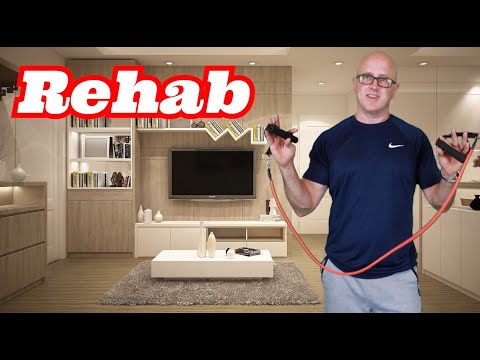
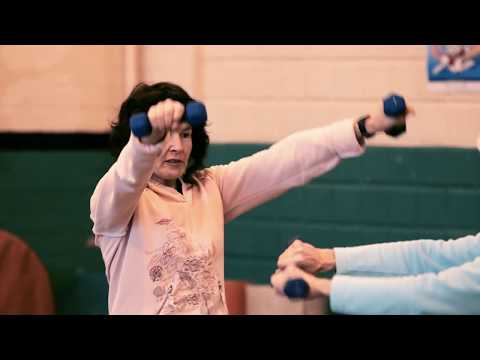
Light strength training 2 times a week helps you keep the leg and arm strength you need for daily life. Use light weights, bands or your own body weight, and do 10 to 15 easy repetitions rather than a few heavy ones.
- Aerobic: walking, stationary cycling, gentle water exercise if your team agrees (water pressure on the chest can affect breathing in more severe heart failure).
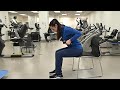
- Leg strength: sit-to-stands from a chair, heel raises holding a counter, seated leg extensions.
- Arm strength: band rows, light bicep curls, wall push-ups.
- Flexibility and balance: gentle stretching, chair yoga or tai chi.
- If you get breathless quickly, try intervals: 1 to 3 minutes of walking, then 1 to 2 minutes of slower walking, repeated.
Daily checks: weight, swelling and how you feel
Weigh yourself every morning, after using the bathroom and before breakfast, and write it down. A sudden gain can mean fluid is building up. Many heart failure teams ask you to call them if you gain more than 2 to 3 pounds (about 1 kg) in a day or 5 pounds (about 2 kg) in a week; use the numbers your own team gives you.
On days when your weight is up, your ankles are more swollen or you are more breathless than usual, skip exercise and call your heart failure nurse or doctor. Diuretics (water pills) can leave you a little dehydrated or dizzy; many people find it easier to exercise a few hours after taking them.
Exercising with an ICD, pacemaker or after a hospital stay
If you have an ICD or pacemaker, you can usually exercise once the wound has healed. For the first few weeks after the device is placed, avoid lifting the arm on that side above your shoulder and avoid heavy lifting, so the leads can settle. Ask your team whether your ICD has a heart rate limit you should stay below, and avoid contact sports.
After a hospital stay for heart failure, start with short walks around the house, a few minutes several times a day, and add a little each day as your team allows. Cardiac rehab after a hospital stay is a good time to rebuild safely.
How to start: a gentle 8-week build-up
Increase one thing at a time: first how often, then how long, then how hard. If you feel unusually tired the next day, stay at the same level for another week.
- Weeks 1-2: 5 to 10 minutes of easy walking, once or twice a day, on most days. Chair strength moves on 2 days.
- Weeks 3-4: 10 to 15 minutes per walk. Strength on 2 days, with 1 set of 10 to 15 repetitions.
- Weeks 5-8: build toward 20 to 30 minutes of walking or cycling on 5 days, at a talk-test pace. Add a second set of strength moves if they feel easy.
When to stop exercising and get help
Stop right away and contact your doctor, or call emergency services if symptoms are severe, if you notice:
- Chest pain, pressure or tightness (call emergency services if it does not go away quickly with rest)
- Shortness of breath that is much worse than usual, or does not settle within a few minutes of rest
- Dizziness, lightheadedness, feeling faint or confused
- A heartbeat that feels very fast, pounding or irregular
- A shock from your ICD (stop, sit down and call your team; call emergency services if you feel unwell or get more than one shock)
- Unusual tiredness or weakness that lasts into the next day
- Weight gain of more than 2-3 lb (1 kg) in a day or 5 lb (2 kg) in a week, new swelling, or breathlessness when lying flat (skip exercise and call your team)
Sample beginner week
An example to show how a balanced week can look. Adjust it to your energy, symptoms and your clinician's advice, or let VitalStep build one around your schedule.
| Day | Activity | Time | Intensity |
|---|---|---|---|
| Monday | Walk (warm-up and cool-down included) + chair strength (sit-to-stands, heel raises) | 25-30 min | Light to moderate (RPE 3-4/10) |
| Tuesday | Stationary bike or walk, intervals of 2 min steady / 1 min easy | 20-25 min | Moderate (RPE 3-5/10) |
| Wednesday | Gentle stretching or chair yoga | 15-20 min | Very light (1-2/10) |
| Thursday | Walk + light arm and leg strength (bands, wall push-ups) | 25-30 min | Light to moderate (RPE 3-4/10) |
| Friday | Two 10-minute easy walks | 20 min | Light (RPE 2-3/10) |
| Saturday | Walk or bike at a talk-test pace | 20-30 min | Moderate (RPE 3-5/10) |
| Sunday | Rest, or a short stroll and balance practice | 0-15 min | Very light (1-2/10) |