Is it safe to exercise during pregnancy?
Yes, if you are healthy and your pregnancy is going normally. ACOG says it is safe to keep up or start regular physical activity. The 2019 Canadian guideline for physical activity in pregnancy, based on a large review of the research, found that activity was not linked with miscarriage, stillbirth, preterm birth, low birth weight or birth defects.
The benefits are real. ACOG lists less back pain, easier bowel movements, healthy weight gain and better fitness, and says exercise may lower your risk of gestational diabetes, preeclampsia and cesarean birth. The Canadian guideline also linked meeting its advice with a lower risk of high blood pressure in pregnancy, urine leaks and depression.
This guide is for a healthy pregnancy. If you have gestational diabetes, high blood pressure in pregnancy or another condition, activity is often still part of your care, but follow the plan your provider gives you.
How much exercise should you do while pregnant?
ACOG advises at least 150 minutes of moderate-intensity aerobic activity every week. That could be 30 minutes on 5 days, or 10-minute sessions spread through the day. The NHS gives the same 150-minute target and suggests 2 muscle-strengthening sessions a week. The Canadian guideline adds: spread activity over at least 3 days, and being active every day is encouraged.
Moderate means your heart rate goes up and you start to sweat. You can still talk normally, but you cannot sing. If you are new to exercise, ACOG suggests starting with as little as 5 minutes a day and adding 5 minutes each week until you reach 30 minutes a day. If you were very active before pregnancy, you can usually keep up your routine with your ob-gyn's OK.
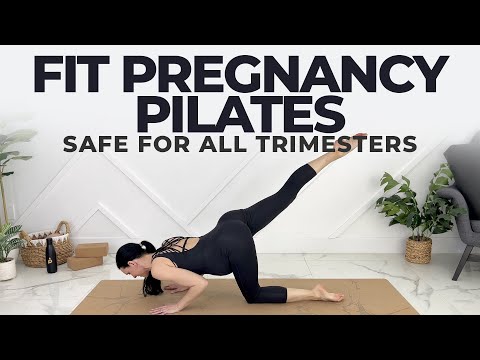
Good choices include brisk walking, swimming and water workouts, a stationary bike, and prenatal yoga or Pilates. A stationary bike is safer than a road bike, because your growing belly shifts your balance. Some days you will feel too tired or sick to exercise. That is normal. Do what you can and pick it up again when you feel better.
Safe ab workouts during pregnancy, trimester by trimester
Working your abs while pregnant is fine, and a strong core helps with posture, back comfort and lifting your baby later. The goal changes, though. Instead of chasing a flat stomach, you train the deep muscles that wrap around your trunk like a corset, along with your back, hips and pelvic floor.
As your bump grows, moves that push the belly out hard, like full sit-ups, crunches and double leg lifts, often feel uncomfortable. If you see a ridge or dome down the middle of your belly during a move, that move is likely too much for now, so switch to an easier version. A prenatal yoga or Pilates class, or a pelvic health physical therapist, can check your form.
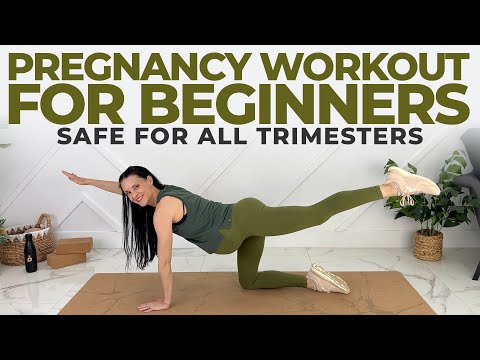
- First trimester: most core moves you already do are fine if you feel well. Add deep core breathing: breathe in, then as you breathe out, gently draw your lower belly in toward your spine. Bird-dogs on hands and knees, glute bridges and side-lying leg lifts work well.
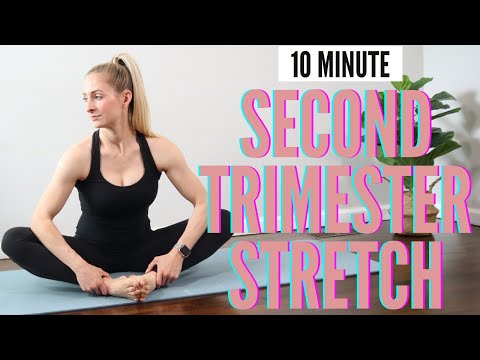
- Second trimester: move most ab work off your back. Try hands-and-knees belly draw-ins, bird-dogs, standing or seated pelvic tilts, wall push-ups, and short side planks on your knees if they feel good.
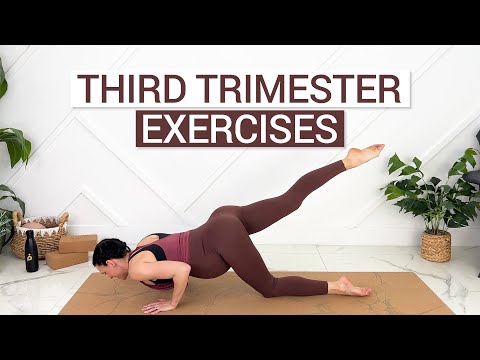
- Third trimester: keep it gentle and upright. Seated core breathing on a chair or ball, standing pelvic tilts, side-lying exercises and pelvic floor squeezes. Focus on good posture and smooth breathing.
- In every trimester: breathe out on the effort, never hold your breath, and stop any move that causes pain, pressure or leaking.
Can you lie on your back to exercise while pregnant?
Limit it. ACOG advises avoiding lying flat on your back as much as possible, because the uterus can press on a large vein that returns blood to the heart. This can make your blood pressure drop for a short time. The NHS says that in later pregnancy you should avoid activities that involve lying flat on your back for more than a few minutes, because it can make you dizzy and is not good for your baby.
The Canadian guideline adds a simple rule: if you feel lightheaded, sick or unwell when you exercise flat on your back, change position. In practice, many people move floor work to hands and knees, side-lying, sitting or a propped-up position from the second trimester on. ACOG also notes that standing still for a long time can let blood pool in your legs, so keep moving between exercises.
Diastasis recti and pelvic floor exercises in pregnancy
Diastasis recti is a gap between the two long muscles down the middle of your belly. It happens because the growing uterus stretches them. It is very common. In a study of 300 first-time mothers (British Journal of Sports Medicine, 2016), about 1 in 3 had it at 21 weeks of pregnancy and 6 in 10 at 6 weeks after birth. The NHS says the gap usually closes by the time your baby is 8 weeks old. If it is still obvious then, ask your doctor about a referral to a physical therapist.
It is a normal part of pregnancy, not something you caused. To avoid adding strain, roll onto your side to get up from lying down, use the core breathing above, and swap moves that make your belly dome.
Your pelvic floor supports your bladder, bowel and uterus. The Canadian guideline says pelvic floor training, such as Kegel exercises, can be done daily to lower the risk of urine leaks, and that learning the right technique gives the best results. The NHS describes the method below.
- Squeeze and draw in as if you are holding in gas and stopping the flow of urine at the same time. You can do this lying down, sitting or standing.
- Long squeezes: hold for as long as you can, but no longer than 10 seconds, then relax.
- Short squeezes: squeeze quickly and let go right away, until the muscles get tired.
- Build up to 10 of each, at least 3 times a day. Keep breathing and do not pull in your stomach as you squeeze.
- If you leak urine, have pelvic pain, or are not sure you are doing it right, ask for a referral to a pelvic health physical therapist.
Exercises to avoid during pregnancy
Pregnancy hormones loosen the ligaments around your joints, and your center of gravity shifts forward, so you are more likely to strain a joint or lose your balance. ACOG advises avoiding jerky, bouncy or high-impact moves and skipping activities with a high risk of falls or blows to the belly. The NHS also says not to start a new vigorous activity, such as running, while pregnant.
- Contact sports and sports where you could be hit in the belly, such as ice hockey, boxing, soccer and basketball.
- Activities with a high fall risk: downhill skiing, water skiing, surfing, off-road cycling, gymnastics and horseback riding.
- Hot yoga or hot Pilates, and exercise outdoors in very hot, humid weather. Overheating matters most in the first trimester.
- Scuba diving and skydiving.
- Exercise above 6,000 feet (about 1,800 m) if you do not already live at high altitude.
- Exercising on an empty stomach, which the NHS advises against. Drink plenty of water before, during and after.
When exercise is not safe in pregnancy, and getting started
Some conditions mean you should not do strenuous exercise, though you can usually keep up normal daily activities. The Canadian guideline lists these, among others: waters breaking early, preterm labor, unexplained ongoing vaginal bleeding, placenta previa after 28 weeks, preeclampsia, a weak (incompetent) cervix, a baby not growing as expected, triplets or more, and uncontrolled type 1 diabetes, high blood pressure or thyroid disease. Other conditions, such as high blood pressure in pregnancy, repeated miscarriage, twins after 28 weeks, anemia with symptoms or a past preterm birth, need a talk with your provider before moderate or vigorous exercise.
If your provider says you are good to go, start small and build slowly. VitalStep can turn this advice into a personalized, low-impact weekly plan with videos you can follow at home, adjusted as your pregnancy goes on.
After birth, the NHS says you can start gentle exercise such as walking, stretching and pelvic floor exercises as soon as you feel up to it after a straightforward birth. Get advice at your 6-week postnatal check before high-impact exercise such as running. Recovery after a cesarean or a complicated birth takes longer, so ask your care team first. The NHS also suggests avoiding sit-ups and planks at first.
When to stop exercising and get help
Stop right away and contact your doctor, or call emergency services if symptoms are severe, if you notice:
- Bleeding from the vagina
- Fluid gushing or leaking from the vagina
- Regular, painful contractions
- Chest pain
- Feeling dizzy or faint
- Shortness of breath before you start exercising
- Headache or muscle weakness
- Calf pain or swelling (stop and call your ob-gyn or midwife right away)
Sample beginner week
An example to show how a balanced week can look. Adjust it to your energy, symptoms and your clinician's advice, or let VitalStep build one around your schedule.
| Day | Activity | Time | Intensity |
|---|---|---|---|
| Monday | Brisk walk + pelvic floor squeezes | 30 min | Moderate (can talk, not sing) |
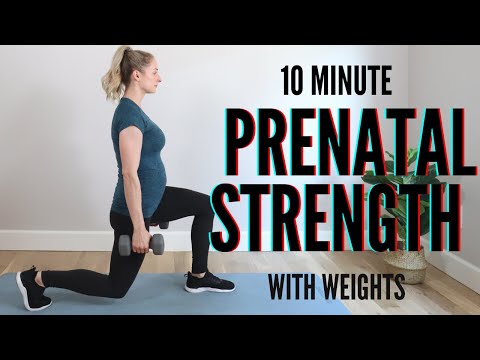
| Tuesday | Prenatal strength: wall push-ups, sit-to-stands, band rows, bird-dogs, side-lying leg lifts | 20-25 min | Moderate (RPE 3-4/10) |
| Wednesday | Swimming, water walking or stationary bike | 30 min | Moderate (can talk, not sing) |
| Thursday | Prenatal yoga or stretching + core breathing (no long holds on your back) | 20-30 min | Light (RPE 2-3/10) |
| Friday | Brisk walk, or two 15-minute walks | 30 min | Moderate (can talk, not sing) |
| Saturday | Prenatal strength and core circuit (as Tuesday) + short walk | 25-30 min | Moderate (RPE 3-4/10) |
| Sunday | Rest, or a gentle stroll and pelvic floor squeezes | 0-20 min | Very light (RPE 1-2/10) |