What is cardiac rehab, and what happens in a session?
Cardiac rehab is a supervised program that combines exercise training, education about heart-healthy living, and support for stress and mood. Many teams describe it in stages:
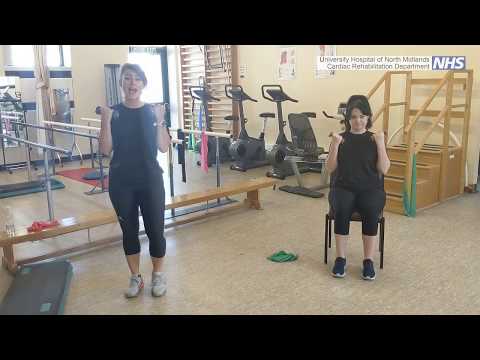
A typical session starts with a check of how you feel, and staff may check your blood pressure and oxygen level during the session. You warm up, do aerobic exercise such as walking, cycling or rowing, add some strength work with bands, light weights or your own body weight, then cool down. Education covers your medicines, heart-healthy eating, quitting smoking and how to tell normal tiredness from warning signs.
The program works. A 2021 Cochrane review of 85 trials with more than 23,000 people with coronary heart disease found that, over 6 to 12 months, exercise-based rehab lowered the risk of a heart attack and of being admitted to hospital for any reason, and slightly improved quality of life.
- Stage 1, in the hospital: rehab often starts before you go home, with advice on your treatment, your medicines and early activity.
- Stage 2, the outpatient program: the main part, usually 2 to 3 sessions a week for about 12 weeks (often 36 sessions in all).
- Stage 3, for life: you keep up regular exercise and healthy habits on your own, at home or in a gym.
Who qualifies for cardiac rehab?
In the United States, Medicare Part B covers cardiac rehab if you have had a heart attack in the last 12 months, coronary bypass surgery, a coronary angioplasty or stent, heart valve repair or replacement, stable angina, a heart or heart-lung transplant, or stable chronic heart failure. Federal rules allow up to 36 one-hour sessions over up to 36 weeks, with more possible if Medicare approves them. After the Part B deductible, you usually pay 20% of the approved amount. If you have other insurance, check your plan.
In the UK, the NHS says cardiac rehab should be offered after a heart operation such as a stent, and it begins while you are still in hospital. In both countries you usually need a referral. If no one has mentioned rehab before you leave the hospital, ask your cardiologist for one. A 2019 statement from the AACVPR, AHA and ACC notes that only a minority of eligible people in the US take part, so do not wait to be asked.
If you have heart failure, see our heart failure guide. For long-term exercise with heart disease after rehab ends, see our heart disease guide.
Can you do cardiac rehab at home?
Often, yes. A 2023 Cochrane review compared home-based and center-based rehab in 24 trials with about 3,000 people after a heart attack, a stent or bypass, or with heart failure. It found no clear difference in deaths or fitness for up to 12 months, quality of life was similar, and people were just as likely to finish either type. Where both are offered, the authors suggest your own preference should guide the choice.
A 2019 scientific statement from the AACVPR, AHA and ACC came to a similar view: home-based rehab may be a reasonable option for selected, stable, low- to moderate-risk patients who cannot attend a center program. Home programs rely on remote coaching, such as phone or video check-ins, with an exercise plan you follow on your own. Hybrid programs mix some center visits with home sessions. Coverage for home programs varies, so check with your insurer or rehab team.
Home rehab is not the same as going it alone. It works best when a rehab team has assessed you, set your starting level and told you which symptoms to watch for.
Coronary stent exercise: how soon can you be active?
Recovery from a planned stent is usually quick. The NHS says most people go home the same day or the next day and are advised to avoid heavy lifting and hard activity for about a week, or until the puncture wound in the wrist or groin has healed. Short, easy walks are a good way to start, building up a little at a time. Ask your team when you can begin.
If your stent was placed in an emergency during a heart attack, the NHS says full recovery can take several weeks or months. Your team will set a slower start. Either way, keep taking your blood-thinning medicines exactly as prescribed. Most people take them for up to a year after a stent, and the NHS warns that stopping early greatly raises the risk of a heart attack.
Exercise after bypass surgery: protecting your breastbone
After bypass or valve surgery through the chest, your breastbone (sternum) needs time to knit. The NHS says it usually takes 2 to 3 months to fully recover, most people return to normal activities after about 6 weeks, and you should avoid heavy lifting for 3 months. Start walking as soon as you feel well enough, and build up as your team advises.
Hospitals give "sternal precautions" to protect the breastbone while it heals. The exact rules and how long they last vary by surgeon. As one example, University of Washington Medical Center handouts ask patients, for the first 6 weeks or until cleared, to:
- Not lift, push, pull or carry more than 10 lb (4.5 kg) with both arms, or 5 lb (2.3 kg) with one arm. A gallon of milk weighs about 8 lb (3.6 kg).
- Not reach overhead with just one arm. Use both arms together.
- Not reach behind your back or twist your body.
- Roll onto your side to get out of bed, and stand up from a chair using your legs, not by pushing on the armrests.
- Hug a pillow to your chest when you cough or sneeze.
- Hold off on vacuuming, yard work and driving, and avoid vigorous exercise and sports like golf or tennis for 3 months.
A week-by-week home walking and strength plan
Here is an example of how a home walking plan can build after heart surgery. It follows a University of Washington Medical Center handout for patients after heart surgery. After a planned stent, many people can progress faster. Use a plan like this only once your team has cleared you, and use their numbers if they differ.
Aim for moderate effort: about 3 to 5 on a 0 to 10 scale, where you breathe harder but can still talk. Many heart medicines, such as beta-blockers, keep your heart rate lower, so go by effort rather than heart rate zones unless your team gave you a range.
VitalStep can build a personalized, low-impact weekly plan with videos that follows a progression like this one, so you have a clear routine for each day at home.
- Week 1: walk about 5 minutes, 3 times a day, on flat ground. Add gentle leg moves such as ankle pumps and marching in place.
- Each week after that: add about 3 minutes to your total daily walking time. Slow down if your effort goes above 5 out of 10.
- Around weeks 6 to 9: you reach about 30 minutes of walking a day, as one walk or split into shorter ones.
- Strength: start with leg moves such as sit-to-stands without using your arms and heel raises. Add arm work with bands only when your team says it is safe, especially after bypass.
- Every session: warm up and cool down for 5 minutes, wait about an hour after a meal, and breathe out as you lift. Never hold your breath.
When can you lift, drive and go back to work?
Timelines vary by procedure, by country and by heart team, so treat these as typical, not rules. In the UK, the NHS advises not driving a car for a week after a planned angioplasty, and for at least 4 weeks after bypass surgery. Bus and truck drivers face longer limits and extra checks. In the US, rules differ by state, so follow your doctor's advice.
The NHS says most people can return to work about a week after a planned stent. After an emergency stent for a heart attack, it can take several weeks or months. After bypass, full recovery usually takes 2 to 3 months, and heavy lifting waits about 3 months. Ask your rehab team before you go back to anything heavy or strenuous, including work that involves lifting.
When to stop exercising and get help
Stop right away and contact your doctor, or call emergency services if symptoms are severe, if you notice:
- Chest pain, pressure or tightness (stop and rest; if it does not go away within a few minutes, or after your nitroglycerin, call 911 or your local emergency number)
- Pain spreading to your arm, neck, jaw or back
- Shortness of breath that is much worse than usual or does not settle with rest
- Dizziness, lightheadedness or feeling faint
- A heartbeat that feels very fast, pounding or irregular
- A clicking, popping or shifting feeling in your breastbone after heart surgery
- Redness, swelling, warmth or discharge at a chest, leg, wrist or groin wound, or a fever
- New swelling in your legs or ankles, or unusual tiredness that lasts into the next day
Sample beginner week
An example to show how a balanced week can look. Adjust it to your energy, symptoms and your clinician's advice, or let VitalStep build one around your schedule.
| Day | Activity | Time | Intensity |
|---|---|---|---|
| Monday | Walk (with 5-min warm-up and cool-down) + leg strength (sit-to-stands without arms, heel raises) | 30 min | Moderate (RPE 3-4/10) |
| Tuesday | Walk or stationary bike at a talk-test pace | 20-30 min | Light to moderate (RPE 3/10) |
| Wednesday | Gentle stretching and balance (no twisting or overhead reaching after bypass) | 15-20 min | Very light (RPE 1-2/10) |
| Thursday | Walk + strength (band rows after a stent; leg moves only after bypass unless cleared) | 30 min | Moderate (RPE 3-4/10) |
| Friday | Two 10 to 15-minute walks | 20-30 min | Light (RPE 2-3/10) |
| Saturday | Longer walk on flat ground | 30-40 min | Moderate (RPE 3-4/10) |
| Sunday | Rest, or a short easy stroll | 0-15 min | Very light (RPE 1-2/10) |