Is exercise good for COPD?
Yes. The GOLD report, the main international strategy for COPD, and the American Thoracic Society and European Respiratory Society (ATS/ERS) both describe pulmonary rehabilitation as one of the most effective treatments for people who get breathless with daily activity. Exercise training is the heart of these programs. People who take part usually walk farther, feel less breathless and report better quality of life.
Exercise helps mainly through your muscles, not your lungs. Fitter leg and arm muscles need less oxygen for the same task, so your breathing does not have to work as hard. Being active also supports mood, sleep, balance and heart health.
Some shortness of breath during exercise is expected and is not harmful in itself. The goal is to feel moderately breathless, then recover, not to avoid breathlessness completely.
Pulmonary rehab: should you ask for a referral?
If COPD limits what you can do, ask your doctor about pulmonary rehabilitation. These programs usually run for 6 to 8 weeks, often twice a week, and combine supervised exercise with education about breathing, medicines and managing flare-ups. The NHLBI notes that some programs are now offered by phone, web or app.
Rehab staff can check how your breathing and oxygen levels respond to exercise and set safe targets for you. If you have recently been in the hospital for a flare-up, starting rehab soon afterward is often recommended. Home exercise, like the plan in this guide, is a good way to keep your progress going once a program ends.
How hard should you exercise with COPD?
Use your breathing, not a heart rate number, to judge effort. A breathlessness scale from 0 (none at all) to 10 (the worst you can imagine) works well. For most home exercise, aim for about 3 to 4 out of 10, which feels moderate to somewhat hard. Your rehab team may set a different target for you.
The talk test is another simple check. You should be able to speak in short phrases, but not chat easily. If you cannot say a few words, slow down or rest until your breathing settles.
- Aim for 20 to 30 minutes of activity on most days, built up gradually. Short bouts of 5 to 10 minutes count.
- Add strength training for your legs and arms 2 to 3 times a week.
- Rest whenever you need to. Stopping to recover is part of the plan, not a failure.
Breathing tips for exercising with COPD
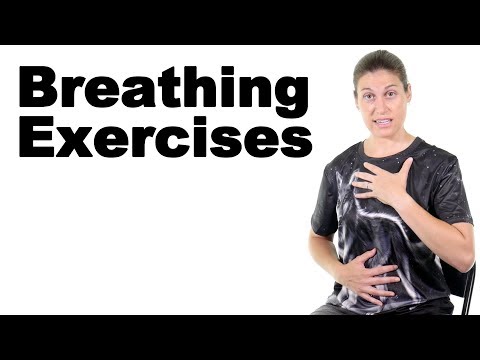
Pursed-lip breathing slows your breathing and helps you empty your lungs more fully, which can ease breathlessness. Breathe in gently through your nose for about 2 counts. Then purse your lips as if blowing out a candle and breathe out slowly for about 4 counts. Use it during effort and while you recover.
Time your breathing with the movement. Breathe out during the hardest part, such as standing up from a chair or lifting a weight, and breathe in as you relax. Never hold your breath.
- If your doctor has prescribed a reliever inhaler to use before exercise, take it as directed, usually 10 to 15 minutes before you start. Keep it with you.
- If you use oxygen, exercise with it. Your care team may set a different flow rate for activity than for rest. Ask them.
- If you use a pulse oximeter, follow your care team's target for your oxygen level during exercise. Do not set your own target.
- Leaning forward slightly with your hands on your thighs or a counter can help you recover after effort.
Best exercises for COPD at home
Walking is the most useful exercise for most people with COPD, because it builds the stamina you need for daily life. A stationary bike is a good choice if walking is hard or the weather is bad. Use a rollator walker if you need one. Leaning on it can make walking easier on your breathing.
Interval training means short bursts of effort with rest breaks in between, such as walking for 1 to 2 minutes, then resting for 1 minute, and repeating. Pulmonary rehab programs often use intervals because they let you do more total exercise with less breathlessness than one long effort.
Strength exercises help with stairs, getting up from a chair and carrying things. Arm exercises can make reaching and lifting less tiring.
- Leg strength: sit-to-stands from a firm chair, heel raises holding a counter, mini squats, step-ups on a low stair.
- Arm strength: band rows, light dumbbell bicep curls, wall push-ups, overhead reaches with light weights done slowly.
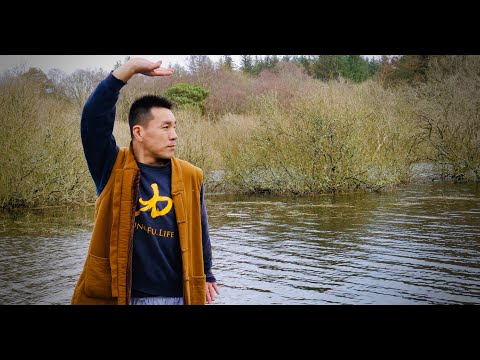
- Flexibility and calm: gentle stretching, seated tai chi or slow yoga with relaxed breathing.
- Start with 1 set of 8 to 12 repetitions and breathe out on the effort.
How to start: a gentle 8-week progression
Increase one thing at a time: how long, how often, or how hard. If you feel wiped out the next day, stay at the same level for another week. VitalStep can build a personalized, low-impact plan that progresses at a pace like this.
Exercise when your breathing is usually at its best. For many people that is later in the morning, after medicines have taken effect. Avoid very cold, hot, humid or polluted air, and exercise indoors on bad days.
- Weeks 1-2: walk or bike in intervals (1 minute on, 1 minute rest) for a total of 10 minutes, 3-5 days a week. One short strength session.
- Weeks 3-4: make the effort periods 2 minutes long, for 15 minutes total. Strength twice a week.
- Weeks 5-6: work up to 20 minutes, with fewer or shorter rests. Add a second set of strength moves.
- Weeks 7-8: 20 to 30 minutes on most days, plus strength 2-3 times a week.
Exercising during and after a COPD flare-up
Do not exercise during a flare-up, when your breathing, cough or mucus is clearly worse than usual, or if you have a fever or chest infection. Follow your COPD action plan and contact your care team.
When you feel better, restart gently. Begin at about half of what you were doing before, and build back up over one to two weeks. If you were in the hospital, ask whether you should be referred to pulmonary rehab.
When to stop exercising and get help
Stop right away and contact your doctor, or call emergency services if symptoms are severe, if you notice:
- Chest pain, pressure or tightness
- Breathlessness that is much worse than usual or does not settle after a few minutes of rest and pursed-lip breathing
- Dizziness, lightheadedness, feeling faint or unsteady
- Blue or gray lips or fingertips, or new confusion (call emergency services)
- An oxygen reading below the target your care team gave you, if you use a pulse oximeter
- A heartbeat that feels very fast, pounding or irregular
- Signs of a flare-up or infection, such as fever, more coughing, or a change in the amount or color of mucus
Sample beginner week
An example to show how a balanced week can look. Adjust it to your energy, symptoms and your clinician's advice, or let VitalStep build one around your schedule.
| Day | Activity | Time | Intensity |
|---|---|---|---|
| Monday | Interval walk (2 min walk, 1 min rest) + leg strength (sit-to-stands, heel raises) | 25 min | Moderate breathlessness (3-4/10) |
| Tuesday | Stationary bike intervals with pursed-lip breathing | 15-20 min | Moderate breathlessness (3-4/10) |
| Wednesday | Rest day: gentle stretching and breathing practice | 10-15 min | Very light (1-2/10) |
| Thursday | Interval walk + arm strength (band rows, bicep curls, wall push-ups) | 25 min | Moderate breathlessness (3-4/10) |
| Friday | Two 10-minute walks at a comfortable pace | 20 min | Light to moderate (2-3/10) |
| Saturday | Leg and arm strength circuit + seated tai chi | 25 min | Moderate (3-4/10) |
| Sunday | Rest day: easy stroll or relaxed breathing | 10-15 min | Very light (1-2/10) |