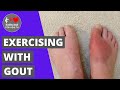
Is exercise good for gout?
Yes, regular moderate exercise is good for people with gout. Gout happens when uric acid builds up and forms crystals in a joint, often the big toe, ankle or knee. Exercise does not dissolve those crystals, and it does not replace urate-lowering medicine. It does help with things linked to gout, such as extra body weight, high blood pressure and heart disease.
The CDC recommends at least 150 minutes of moderate physical activity a week as part of self-care for gout. The NHS advises exercising regularly, but avoiding very intense exercise and activities that put a lot of pressure on your joints.
Moving between flares also keeps the joints that gout affects flexible and the muscles around them strong, which can make it easier to get back on your feet after an attack.
Can you exercise during a gout flare?
Do not exercise the affected joint during a flare. A gout attack makes the joint hot, red, swollen and very painful. The NHS advises resting and raising the limb, keeping the joint cool with an ice pack wrapped in a towel, and keeping pressure off it. Drink plenty of water unless your doctor has told you to limit fluids.
Flares are usually treated with medicine, such as an anti-inflammatory, colchicine or a steroid. Start treatment early, as your doctor advised. If this is your first attack, or you also have a fever, see a doctor promptly, because a hot, swollen joint can sometimes be an infection.
You can still move other parts of your body gently if you feel up to it. Seated arm exercises or easy upper-body stretches are fine, as long as they do not jolt the painful joint.
How to get back to exercise after a gout attack
Wait until the swelling and heat have mostly settled and you can bear weight comfortably. Then restart slowly. Begin with gentle range-of-motion moves, such as ankle circles or toe curls, before you go back to walking.
- Days 1-3 after a flare settles: gentle joint movement and short, easy walks around the house.
- Week 1: short walks of 5 to 10 minutes, or swimming or cycling if walking is still sore.
- Weeks 2-3: build back up to your usual routine over a couple of weeks.
- Mild stiffness is normal. If pain, swelling or redness returns, stop and rest the joint.
Best exercises for gout between flares
Low-impact aerobic exercise is the best starting point, because it raises your heart rate without pounding your feet and knees. Aim to build up toward 150 minutes a week at moderate effort. That means you breathe harder but can still talk.
Strength training 2 times a week helps support your joints and burns more energy over time. Use body weight, bands or light dumbbells. Gentle stretching keeps the toes, ankles and knees moving well.
If you are new to exercise, start with 10 minutes on most days and add a few minutes each week. Increase only one thing at a time: how long, how often, or how hard. If a joint feels sore the next day, stay at the same level for another week before you build up again. Swimming and water aerobics are especially kind to sore feet, because the water supports your weight.
- Low-impact cardio: walking in supportive shoes, cycling, swimming, water aerobics, an elliptical.
- Strength at home: sit-to-stands, wall push-ups, band rows, glute bridges, seated leg raises.
- Mobility: ankle circles, toe curls and spreads, calf stretches, gentle knee bends.
- Choose well-cushioned shoes with room for your toes, especially if gout affects your feet.
Can exercise trigger a gout flare?
Moderate exercise is unlikely to cause a flare, but a few things that often go with exercise can. Losing a lot of fluid through sweat raises the level of uric acid in your blood. Very intense or long sessions, a joint injury, and drinking alcohol afterward can also play a part.
- Drink water before, during and after exercise, and more in hot weather.
- Avoid long, very hard sessions, especially in the heat, until you know how your body reacts.
- Protect your joints from knocks and heavy pounding, such as jumping or running on hard ground.
- Skip beer or sugary sports drinks as a reward. Water is the best choice.
Gout and weight loss: why slow and steady matters
If you are carrying extra weight, losing some can lower uric acid and reduce the strain on your joints. The American College of Rheumatology gout guideline suggests weight loss for people with gout who are overweight, along with limiting alcohol.
How you lose weight matters. Crash diets, fasting and very low-calorie plans can raise uric acid for a while and may trigger a flare. The NHS advises losing weight gradually. Aim for a steady pace through regular activity and balanced meals, and ask your doctor or a dietitian for help.
VitalStep can build a personalized, low-impact plan that starts gently and steps up over time, so you can build activity without stressing sore joints.
Does exercise replace gout medicine?
No. Exercise and weight control support your health, but they usually are not enough on their own to keep uric acid low if you have frequent flares or gout lumps (tophi). Medicines that lower uric acid, such as allopurinol, are the main long-term treatment. Keep taking them as prescribed, even when you feel well and are exercising more. Ask your doctor what your uric acid target is and how often it should be checked.
When to stop exercising and get help
Stop right away and contact your doctor, or call emergency services if symptoms are severe, if you notice:
- A joint that becomes hot, red, swollen or suddenly very painful (a possible flare; stop and rest it)
- Fever or chills along with a painful, swollen joint (see a doctor promptly, as this can be an infection)
- Pain that makes you limp or change how you walk
- Chest pain, pressure or tightness
- Dizziness, fainting, or shortness of breath that is much worse than expected
- Signs of dehydration, such as feeling very thirsty, dark urine, a dry mouth or a headache
Sample beginner week
An example to show how a balanced week can look. Adjust it to your energy, symptoms and your clinician's advice, or let VitalStep build one around your schedule.
| Day | Activity | Time | Intensity |
|---|---|---|---|
| Monday | Walk in cushioned shoes + light strength (sit-to-stands, band rows, glute bridges) | 30 min | Moderate (RPE 3-4/10) |
| Tuesday | Stationary bike or cycling | 25-30 min | Moderate (RPE 3-4/10) |
| Wednesday | Rest day: ankle, toe and calf mobility | 10 min | Very light (RPE 1-2/10) |
| Thursday | Swimming or water aerobics | 30 min | Moderate (RPE 3-4/10) |
| Friday | Walk + light strength (wall push-ups, seated leg raises) | 30 min | Moderate (RPE 3-4/10) |
| Saturday | Elliptical, cycling or a flat walk with a friend | 30 min | Moderate (RPE 3-4/10) |
| Sunday | Rest day: gentle stretching or an easy stroll | 15 min | Very light (RPE 1-2/10) |