Is it safe to exercise during cancer treatment?
For most people, yes. In 2019 an international roundtable led by the ACSM reviewed the research and published exercise guidelines for cancer survivors, which includes people in treatment. It concluded that exercise is generally safe during and after treatment, and that every survivor should "avoid inactivity." The 2022 American Cancer Society (ACS) guideline for survivors adds that physical activity assessment and counseling should begin as soon as possible after diagnosis, to help you prepare for treatment, cope with it and manage side effects.
Safe does not mean the same plan for everyone. Some people need a medical check and a supervised start, such as after lung or abdominal surgery, with an ostomy, heart or lung disease, extreme fatigue, a worsening condition, or cancer that has spread to the bones. A physical therapist or a certified exercise physiologist who works with cancer patients can tailor a plan. Ask your oncology team for a referral.
How much exercise helps cancer fatigue, anxiety and depression?
The ACSM roundtable found good evidence that the right dose of exercise improves fatigue, anxiety, depressive symptoms, physical function and quality of life in people with cancer, both during and after treatment. The program that worked most often was moderate aerobic exercise at least 3 times a week, for at least 30 minutes, kept up for 8 to 12 weeks. Adding strength training at least 2 times a week, with 2 sets of 8 to 15 repetitions, gave similar benefits.
Moderate means you breathe harder but can still talk in full sentences. Walking and a stationary bike are common, easy ways to get there. The roundtable found no evidence that light activity on its own reduces fatigue, so aim to build toward a moderate effort over time, at your own pace.
- Fatigue: moderate aerobic exercise for 30 minutes, 3 times a week, for 12 weeks. Combined aerobic and strength training, or strength training twice a week, may also help, the latter especially in prostate cancer. Home programs worked about as well as supervised ones.
- Anxiety: moderate aerobic exercise 3 times a week for 12 weeks, or combined aerobic and strength training twice a week for 6 to 12 weeks. Strength training alone did not appear to help.
- Depression: a similar dose to anxiety. Supervised programs seemed to work better than home programs for mood.
- Physical function: aerobic, strength or combined training 2 to 3 times a week for 8 to 12 weeks. Supervised programs worked better than home programs here.
- Still uncertain: whether exercise helps chemo-related nerve damage (neuropathy) or memory and thinking problems.
Exercise during chemo and radiation: safety tips
Treatment changes from week to week, so your plan should too. Ask your team what your latest blood counts mean for exercise.
- Low white blood cells (infection risk): the ACS and Cancer Research UK advise staying away from public gyms and crowds until your risk returns to normal. Exercise at home or outdoors instead. The National Cancer Institute (NCI) says a fever of 100.5°F (38°C) or higher can be a sign of infection that needs urgent medical attention, so do not exercise; call your team.
- Low platelets: you may bruise or bleed more easily. Cambridge University Hospitals (NHS) advises avoiding contact sports and vigorous exercise, and sticking to light strength work, gentle stretches and short walks.
- Low red blood cells (anemia): you may get short of breath or tired sooner. The same NHS hospital advises low to moderate exercise only, with a very slow increase in effort.
- Neuropathy (numb or tingling feet or hands): the ACS notes a higher risk of falls. The ACSM suggests a stationary bike or water exercise in place of walking, and balance training. Hold a counter or handrail for standing moves.
- Ports and central lines: the ACS advises against strength training that uses the muscles around the catheter, and against pool, lake or ocean water if you have a central line or feeding tube.
- Radiation: check with your radiation team before swimming. Swim only if the treated skin has no irritation or sores, and rinse off after the pool.
- Sun: Cancer Research UK says some people, such as those with melanoma, need to take extra care in the sun when exercising outdoors.
Exercising with bone metastases, after surgery or with an ostomy
If cancer has spread to your bones, or treatment has thinned them, some movements can raise the risk of a fracture. The ACSM advises avoiding high-impact moves and bending the spine forward or back under load, such as lifting while bent over. Cancer Research UK also advises avoiding exercises that twist the spine, such as yoga-style twists, rowing machines, and golf or tennis swings. Preventing falls matters just as much. Bone pain can be an early sign of spread to the bone, so new or worsening bone pain is a reason to stop and get checked before you continue.
After surgery, you may need to wait before going back to your usual exercise; ask your surgeon or specialist nurse what is safe and when. The ACS notes that being as active as possible may reduce complications from surgery, so gentle walking is often encouraged early on.
- Ostomy: empty the bag before exercise. Start strength work with low resistance and progress slowly, ideally with guidance, because of the risk of a hernia next to the stoma.
- Ostomy: breathe out on the effort and avoid holding your breath. Change any core exercise that makes your belly bulge or feel pressure.
- Ileostomy: you are at higher risk of dehydration, so ask your team how to stay hydrated before, during and after exercise.
Breast cancer: weight training, lymphedema and Pilates
Women were once told to avoid lifting with the arm on the side of their breast surgery, for fear of lymphedema (arm swelling). The PAL (Physical Activity and Lymphedema) trial tested this. In women who already had stable lymphedema (NEJM, 2009), a year of slowly progressive weight lifting did not increase arm swelling. It cut flare-ups (14% vs 29%) and improved symptoms and strength. Lifters wore a fitted compression sleeve. In women at risk after lymph node removal (JAMA, 2010), lifting did not raise the rate of new lymphedema (11% vs 17% in the non-exercise group).
The key in both trials was supervised instruction at the start, very light weights, and slow progress. The ACSM calls this "start low, progress slow." Whether to wear a compression sleeve while exercising is your choice; the evidence is unclear, so ask your lymphedema therapist.
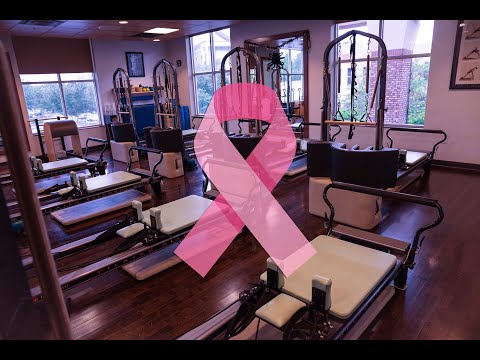
Pilates is popular after breast cancer. A 2026 review of 6 randomized trials with 531 women found that Pilates reduced pain. It may help with fatigue and sleep too, but those results were not clear enough to be sure. Choose a teacher who has worked with cancer survivors, and skip deep twists and spine flexion if you have bone thinning or bone metastases.
Exercise after cancer treatment: guidelines for survivors
After treatment, the ACS says the ultimate aim is 150 to 300 minutes of moderate activity a week, with muscle-strengthening exercise on at least 2 days. Its 2022 guideline asks survivors to engage in regular activity suited to their cancer and health, and to keep or build muscle. In large observational studies, survivors of breast, colorectal and prostate cancer who were more active after diagnosis had a lower risk of death. These studies show a link, not proof that exercise caused the difference.
- Breast cancer: include strength training for both arms, progressed slowly, as in the PAL trial above.
- Prostate cancer: strength training twice a week is a good fit. In the ACSM review it was one of the options that eased fatigue, especially in prostate cancer.
- Colon cancer: follow the ostomy tips above if you have one, and build core strength gently with your team's okay.
- Bone health: the ACSM says walking alone does not seem to be enough to improve bone. The programs that helped combined strength training with impact work, supervised for a year, and they may not be safe if bones are fragile.
How to start exercising on bad fatigue days
Cancer fatigue is common, and pushing through it on a bad day can leave you more drained the next day. The NCI suggests keeping daytime naps under an hour so they do not disrupt your sleep at night. The ACS suggests that if you feel very tired, you try about 10 minutes of light exercise a day and build up from there, and rest when you need to. Cancer Research UK suggests short chunks of 10 to 15 minutes. Plan activity for the time of day you usually have the most energy.
Keep a simple log of your energy, symptoms and treatment days, and you may notice a pattern around your treatment days. Do less on those days and more on good days. VitalStep can turn this into a personalized, low-impact weekly plan with follow-along videos, and you can scale it back on hard weeks.
- Bad days: 5 to 10 minutes of easy walking around the house, gentle stretching or chair exercises. Or just stand and move every hour.
- Okay days: 10 to 20 minutes of walking or cycling at an easy to moderate pace, plus a few strength moves.
- Good days: build toward 30 minutes of moderate activity, and strength training 2 days a week.
- Increase one thing at a time, and if you feel wiped out the next day, stay at the same level for another week.
When to stop exercising and get help
Stop right away and contact your doctor, or call emergency services if symptoms are severe, if you notice:
- Fever of 100.5°F (38°C) or higher, or chills (do not exercise; call your cancer team, as infection during treatment can be serious)
- Chest pain or pressure, or shortness of breath that is much worse than usual
- Dizziness, lightheadedness or fainting
- Any bleeding, such as a nosebleed, or new easy bruising
- New or worsening bone pain, especially in the back, hips, ribs or upper arms or legs
- New swelling, heaviness or tightness in an arm or leg, or a lymphedema flare
- Redness, swelling, pain or leaking around a port, catheter or surgical wound
- Extreme tiredness or weakness that is worse than usual or lasts into the next day
Sample beginner week
An example to show how a balanced week can look. Adjust it to your energy, symptoms and your clinician's advice, or let VitalStep build one around your schedule.
| Day | Activity | Time | Intensity |
|---|---|---|---|
| Monday | Walk at a talk-test pace + 2 sets of chair and band strength (sit-to-stands, rows, wall push-ups) | 30-40 min | Moderate (RPE 3-4/10) |
| Tuesday | Gentle stretching or seated yoga, plus a short easy walk | 15-25 min | Light (RPE 2-3/10) |
| Wednesday | Stationary bike or walk | 20-30 min | Moderate (RPE 3-4/10) |
| Thursday | Strength training, light weights or bands, 8-15 reps + balance practice near a counter | 25-30 min | Moderate (RPE 3-5/10) |
| Friday | Walk or bike (two 10-minute bouts if tired) | 20-30 min | Moderate (RPE 3-4/10) |
| Saturday | Gentle Pilates or tai chi (no deep twists if bones are fragile) | 20-30 min | Light to moderate (RPE 2-4/10) |
| Sunday | Rest, or a slow stroll outdoors | 0-15 min | Very light (RPE 1-2/10) |