
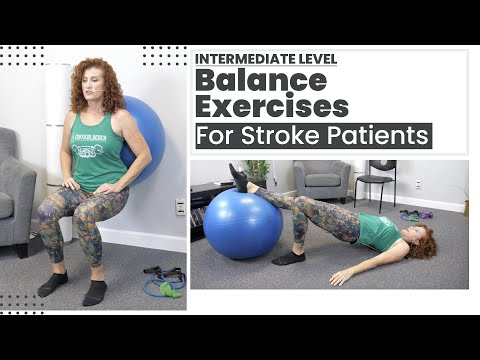
Intermediate Balance Exercises for Stroke Patients
17-minute workout video. Balance, Low Impact, Strength. targeting Full Body, Legs, Core. low intensity. helps with Rehabilitation / Treatment Support.
⏱️ Key Moments
Is this workout right for you?
This 18-minute intermediate balance workout uses a chair and an exercise ball. It is low impact and low intensity, and it works the legs, core, and full body. The title names stroke patients, and the video includes heel raises, crossover steps, and Swiss ball exercises. It offers a chair modification and built-in rest periods. The video is not listed for any specific condition, so talk with your care team before you start.
Good for
- Adults who want balance and leg strength work that is low impact.
- People working on balance as part of a rehabilitation plan guided by a doctor or therapist.
- People who can stand with support from a chair and want a session they can adjust.
- Those who already do some light or moderate activity and want a structured intermediate session.
- Anyone who wants rest periods built into the workout so they can recover between efforts.
Check first
- The video is labeled intermediate, so it may be harder than a beginner routine. If you are new to balance work, consider a shorter session first.
- Standing balance work can lead to falls. Keep a sturdy chair or wall nearby and wear supportive, closed shoes.
- Swiss ball work is less stable than working on the floor. Ask your therapist whether a ball is appropriate for you.
- Ask your doctor about any limits on balance, strength, or feeling in your legs before you begin.
Before you start
- Gather a sturdy chair, ideally one with arms, and an exercise ball sized for your height.
- Clear a space free of rugs, cords, and furniture you could bump into.
- Have water and a towel nearby, and plan to rest whenever you need to.
- Take any medicines and eat as your doctor advises, and tell someone you will be exercising.
Make it easier
- Use the chair modification the video offers, and keep a hand on a stable support at all times.
- Pause the video during rest periods and take longer breaks if you need them.
- Start with a short part of the 18 minutes and build up over several weeks.
- Practice near a wall or counter so you can reach for support quickly.
When it feels easy
- As your balance improves, rely less on support, but only if your care team agrees.
- Add a few minutes to your sessions as your stamina grows, keeping the same safe setup.
- On stronger days, repeat the routine while still taking the built-in rest periods.
- Pair this video with other moderate activity to work toward the general adult target of 150 minutes of moderate activity a week.
How it fits your week
At 18 minutes, this video fits well into a short weekly routine. Many adults aim for 150 minutes of moderate activity a week. Because this session is low intensity, it may not count fully toward that target on its own. Plan a few sessions across the week with rest days in between, and adjust the schedule as your care team advises.
Frequently asked questions about Intermediate Balance Exercises for Stroke Patients
Is this balance workout safe for stroke patients?▼
The video is not listed as suitable or unsuitable for any condition, so no one can say it is safe for you. Many people with stroke-related balance concerns use chair-supported balance work, but your doctor or therapist should decide whether it fits your abilities. Share the video with them before you start.
Do I need an exercise ball for this workout?▼
Yes, the video lists an exercise ball and a chair as equipment. The ball is used for the Swiss ball exercises, which are less stable than the floor. If you do not have a ball, ask a therapist for suitable alternatives. Do not try ball work without a steady setup nearby.
How often should I do balance exercises after a stroke?▼
There is no single answer for everyone. Many adults use sessions like this a few times a week, with rest days between them. Ask your therapist how often and how hard to train, since your balance and strength may change over time. Stop and seek urgent care if you feel dizzy, chest pain, or sudden weakness.
This guide is general information written by VitalStep from the video's details, not medical advice. Ask your doctor what is right for you.
About the creator
This workout was created by Critical Bench Compound and is played from YouTube, so every view counts for the creator's channel. VitalStep adds condition tags, a written guide and safety notes to help you decide whether it fits your health. If you enjoy it, support the creator on YouTube.
More from Critical Bench Compound on VitalStep


Related Workouts
 8:42
Improve Your Balance and Prevent Falls with Standing Exercises
Curtis Adams
 20:03
Standing Balance Workout for Seniors and Beginners for Muscle Strength
Senior Fitness With Meredith
 8:54
Fall Prevention Exercises for Balance Improvement
AIM Fitness-Activities In Motion
 1:33
Balance Exercises for Seniors to Avoid Falls and Improve Stability
Sportizen Health
 22:25
Balance Exercises for Seniors and Beginners to Improve Stability
Senior Fitness With Meredith
 18:50
Senior Balance and Leg Strength Routine for Fall Prevention
Taichi Workout