
Insomnia Exercise Plan for Women 29-39
7-Day Stress Reduction & Flexibility Program
Morning Workout - Gentle Yoga Flow
Start with 5 deep breaths in a seated position. Move into Cat-Cow (10 reps), Child’s Pose (hold 1 min), Downward Dog (hold 1 min), and Standing Forward Fold (hold 1 min). Repeat the sequence twice. Best before breakfast or 1 hour after eating.
Afternoon Workout - Seated Neck & Shoulder Stretches
Sit upright. Gently tilt your head side to side (hold 10 seconds per side). Roll shoulders backward and forward (10 reps each). Gently turn head left/right (10 seconds each). Repeat twice. Can be done at your desk.
Evening Workout - Progressive Muscle Relaxation (PMR)
Lying down, tense and relax each muscle group from toes to head: hold tension for 5 seconds, then release for 10 seconds, moving up the body. Perform after dinner, before bedtime routine.
Morning Workout - Dynamic Stretching Routine
March in place (2 mins), Arm Circles (10 reps), Hip Circles (10 reps each way), Leg Swings (10 reps each leg), Side Bends (10 reps each side). Do before breakfast.
Afternoon Workout - Breathing Exercises (Box Breathing)
Inhale for 4 seconds, hold for 4 seconds, exhale for 4 seconds, hold for 4 seconds. Repeat for 10 cycles. Best sitting or lying down.
Evening Workout - Yin Yoga (Deep Stretch)
Hold each pose (Butterfly, Reclined Twist, Legs-up-the-wall) for 3-5 minutes each. Do after eating, before bedtime. Use a mat or soft surface.
Morning Workout - Mindful Walking
Walk at a comfortable pace, focus on your breath and the sensation of movement. Avoid distractions. Can be done outside or on a treadmill.
Afternoon Workout - Wrist & Forearm Stretches
Extend arm, palm up, gently pull fingers back with other hand (hold 10 seconds). Repeat palm down. Do 3 times each arm. Good for computer users.
Evening Workout - Guided Relaxation (Body Scan)
Lie down, close your eyes, slowly focus on each body part from head to toes, noticing tension and releasing it. Use a guided audio if helpful.
Morning Workout - Pilates Core & Stretch
Pelvic Tilts (10 reps), Supine Marching (10 reps each leg), Lying Spinal Twist (hold 30 seconds each side), Seated Forward Bend (hold 1 min). Wait 30-60 minutes after breakfast if needed.
Afternoon Workout - Desk Mobility Routine
Shoulder shrugs (10 reps), seated torso twist (10 reps each side), seated knee lifts (10 reps each leg). Can be performed at your desk.
Evening Workout - Gentle Stretch & Breath
Standing quad stretch (30 sec each leg), chest opener (hold 1 min), deep belly breathing (5 mins). Ideal before bed.
Morning Workout - Sun Salutation Yoga
Perform 5 rounds of Sun Salutation A, moving slowly and focusing on your breath. Empty stomach or light snack beforehand.
Afternoon Workout - Standing Hamstring & Hip Flexor Stretch
Stand, extend one leg forward, hinge at hips to stretch hamstring (hold 30 sec each). Step forward into gentle lunge for hip flexor (hold 30 sec each). Repeat both sides twice. Can be done after a short walk.
Evening Workout - Sleep Prep Routine (Light Stretch + Breathwork)
Child’s Pose (2 min), Spinal Twist (1 min each side), Deep 4-7-8 Breathing (inhale 4 sec, hold 7 sec, exhale 8 sec; repeat 5 times). Before bed, dim lights for better relaxation.
Morning Workout - Outdoor Walk + Stretch
Brisk walk outdoors (30 mins). After walking, perform standing quad stretch, calf stretch, and side stretch (hold each for 30 seconds, repeat twice). Wear comfortable shoes; hydrate before and after.
Afternoon Workout - Foam Rolling or Self-Massage
Gently roll or massage calves, thighs, and back, spending about 1 minute on each area. Avoid painful pressure.
Evening Workout - Restorative Yoga (Relaxation Focus)
Use props or pillows for supported Child’s Pose (5 min), Reclined Butterfly (5 min), and Legs-up-the-wall (10 min). Ideal before sleep.
Morning Workout - Tai Chi (Beginner Routine)
Follow a basic Tai Chi video or perform slow, flowing movements: Commencing Form, Parting the Horse’s Mane, Wave Hands Like Clouds (5 minutes each, repeat sequence). Do in a quiet space.
Afternoon Workout - Deep Breathing & Mindfulness Walk
Walk slowly, focus on breathing in for 5 seconds, out for 5 seconds. Notice your surroundings without judgment. Outdoors if possible.
Evening Workout - Gentle Bedtime Stretch
In bed, do knee-to-chest stretch (30 sec each leg), supine twist (30 sec each side), finish with 5 minutes of slow breathing. No electronics during or after stretching.
Who this plan is for
This plan was built for women 29-39 living with Insomnia, starting from a moderate activity activity level, with these goals: Stress Reduction / Better Sleep, Flexibility / ROM Improvement. If your age, health or fitness is different, use it as a starting point and adjust, or build a free plan for your own profile.
Exercise guides: Exercise for Insomnia & Sleep
The week at a glance
21 sessions on 7 days, 340 minutes in total; sessions last 10–40 minutes.
About 70 of these minutes are walking or other cardio, which count toward the WHO guideline of 150 minutes of moderate aerobic activity a week (47% of it, if done at a pace that makes you breathe a little harder). Strength work appears on 0 days; WHO recommends muscle strengthening on 2 or more days a week. Stretching and breathing sessions help mobility and relaxation but are not counted here.
| Day | Sessions | Minutes | Main activities |
|---|---|---|---|
| Monday | 3 | 45 | Yoga & tai chi, Stretching, Breathing & relaxation |
| Tuesday | 3 | 45 | Stretching, Breathing & relaxation |
| Wednesday | 3 | 45 | Walking, Stretching, Breathing & relaxation |
| Thursday | 3 | 45 | Stretching |
| Friday | 3 | 45 | Yoga & tai chi, Stretching |
| Saturday | 3 | 70 | Walking, Yoga & tai chi |
| Sunday | 3 | 45 | Yoga & tai chi, Walking, Stretching |
Minutes by activity: Stretching 140 · Yoga & tai chi 80 · Walking 70 · Breathing & relaxation 40.
Safety notes
- Check with your doctor or physiotherapist before starting, especially with heart disease, uncontrolled blood pressure or blood sugar, recent surgery or new pain.
- Keep to a pace where you can talk. Mild muscle effort is normal; sharp or increasing pain is a sign to stop.
Stop and get help if you notice
- Chest pain, pressure or tightness during or after exercise (call 911 if it does not go away within a few minutes of rest)
- Sudden severe shortness of breath, fainting, or a racing or irregular heartbeat (call 911)
- Signs of stroke, such as face drooping, arm weakness or trouble speaking (call 911 right away)
- Feeling dizzy, very drowsy or unsteady during exercise, especially if you take sleep medicine
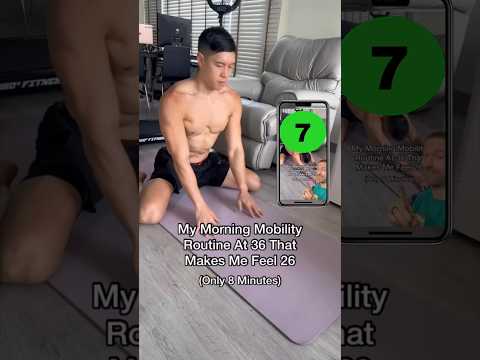
Beginner follow-along videos


Similar plans
How this plan was made
VitalStep’s AI generated this plan from the profile above (age group, gender, health conditions, goals and activity level), using general exercise guidance for those conditions. It was selected by the VitalStep team as a starter plan for this group. It has not been reviewed by a clinician for any individual and is general information, not medical advice.