
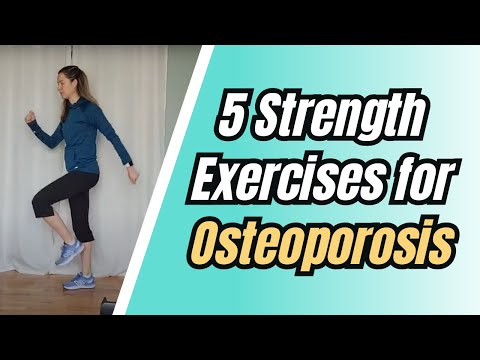
Weight Bearing Exercises for Osteoporosis Strength and Mobility
15-minute workout video. Strength, Low Impact, Warm Up, Cool Down. targeting Full Body, Legs, Arms. low intensity. helps with Muscle Strength, Rehabilitation / Treatment Support.
⏱️ Key Moments
Is this workout right for you?
This 15-minute beginner workout is listed for people with osteoporosis. It is low impact and low intensity. It includes a warm-up, five weight-bearing exercises that focus on strength and balance using dumbbells and a chair, and a cool-down with stretches. It works the full body, legs, and arms. Rest periods are built in, and a chair option is included for support.
Good for
- Adults with osteoporosis who want gentle strength and balance work that is easy to fit into a short session.
- People who are new to exercise or have limited mobility and want a seated or chair-supported option.
- Anyone looking for a short, low impact routine that includes a warm-up and cool-down.
- People who want to build strength in the legs and arms with light dumbbells.
Check first
- Ask your doctor or physical therapist whether weight-bearing exercise and dumbbells are right for your bone health and fracture risk.
- Tell your doctor if you have had a recent fracture, spine problem, or surgery before you start.
- Have a sturdy chair with no wheels nearby, and a clear space around you.
Before you start
- Pick dumbbells that feel light and manageable. You can start with very light weights or even no weights.
- Wear supportive shoes and clothing you can move in.
- Have water nearby and take the rest periods the video offers if you feel tired.
Make it easier
- Use the chair for support whenever you need it, and keep one hand on it for balance.
- Skip the dumbbells or use lighter weights until your movements feel steady.
- Stop and rest for longer between parts if you need more time to catch your breath.
When it feels easy
- Once the routine feels comfortable for several weeks, check with your doctor before you add heavier weights.
- Repeat the full workout a second time on days when you feel strong and steady.
- Add a short walk on other days to build your overall activity.
If you have a health condition
Osteoporosis
This video is listed for osteoporosis and uses weight-bearing work, which is one way many people with the condition keep bone and muscle strength. The workout is marked low impact and avoids moves that load the spine or cause breath holding. Still, your own bone density, fracture history, and spine health matter most. Ask your doctor which movements and weights are safe for you.
Read the full osteoporosis exercise guide →How it fits your week
Because this workout takes about 15 minutes, you could do it several days a week alongside other activity. The general adult target is 150 minutes of moderate activity a week. This routine can count toward that total if your doctor agrees it fits your level. Many people use it on non-consecutive days and add short walks or other gentle activity on the remaining days. Start with a few sessions a week and increase only as your body allows.
Frequently asked questions about Weight Bearing Exercises for Osteoporosis Strength and Mobility
Is this workout safe for osteoporosis?▼
This video is listed for osteoporosis and is marked low impact with a chair option. Many people with osteoporosis can do gentle weight-bearing work, but safety depends on your own bones, fracture history, and health. Check with your doctor or physical therapist before you start, especially if you have had a fracture or spine problem.
Do I need dumbbells to do this workout?▼
The video uses dumbbells and a chair. You can start with very light weights or no weights while you build comfort. Many people begin without weights and add them later. Ask your doctor or a physical therapist what weight is right for you before you increase it.
How often should I do a 15-minute osteoporosis workout?▼
Many adults do this kind of short session several days a week, with rest days in between. The general adult target is 150 minutes of moderate activity a week, so a 15-minute session can help you build toward it. Listen to your body, and talk with your doctor about how often is right for you.
This guide is general information written by VitalStep from the video's details, not medical advice. Ask your doctor what is right for you.
About the creator
This workout was created by AIM Fitness-Activities In Motion and is played from YouTube, so every view counts for the creator's channel. VitalStep adds condition tags, a written guide and safety notes to help you decide whether it fits your health. If you enjoy it, support the creator on YouTube.
More from AIM Fitness-Activities In Motion on VitalStep

Related Workouts
 31:54
Seniors & Beginners Cardio & Strength Workout for Weight Control
Curtis Adams
 20:46
20-minute Full Body Strength Training and Cardio for Seniors
Curtis Adams
 10:36
10-minute Full Body Strength and Balance Workout for Stability
Curtis Adams
 28:16
Balance, Strength & Core Workout to Improve Stability for Beginners & Seniors
SeniorShape Fitness
 14:19
14-minute Full Body Workout for Seniors to Maintain General Health
Roberta's Gym
 13:19
Senior Fitness Full Body Dumbbell Workout for Muscle Strength
Senior Fitness With Meredith