
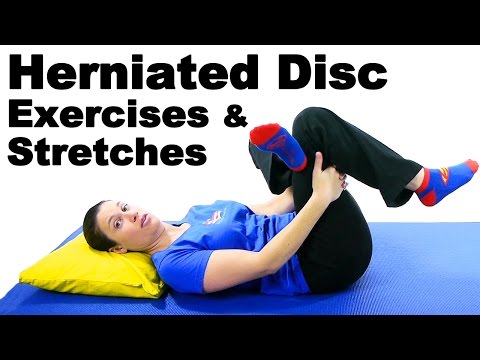
Herniated Disc Exercises and Stretches for Back Pain Relief
3-minute workout video. Stretching, Low Impact, Floor Exercise. targeting Back, Glutes. low intensity. helps with Pain Relief, Rehabilitation / Treatment Support.
⏱️ Key Moments
Is this workout right for you?
This 3-minute beginner video is a floor workout with no equipment. It focuses on stretching the back and glutes, and it includes gentle spinal extension movements. It is labeled low impact and low intensity, and it includes rest periods. It is listed for chronic back pain related to a herniated disc. A short session like this is a gentle way to move your back and hips, but it is not a treatment for a disc problem. Your doctor or physical therapist can tell you what fits your condition.
Good for
- Adults who want a short, low impact floor routine for the back and glutes
- People who are new to exercise or working around limited mobility
- Anyone who wants a gentle stretch break between longer workouts or daily activities
- People who want an option that needs no equipment and can be done at home
Check first
- Ask your doctor or physical therapist whether floor-based back exercises are right for your disc condition before you start
- Stop if you have new numbness, weakness, tingling in a leg, or loss of bladder or bowel control and get medical care right away
- Skip any movement that sends pain down your leg or makes your symptoms clearly worse
- Talk to your care team if you have a recent back injury, surgery, or a flare of pain
Before you start
- Clear a flat, non-slip space on the floor with enough room to lie down fully
- Use a mat or folded blanket under you if the floor feels hard
- Keep water nearby and have a chair or wall close by for support when you get up
- Move slowly and breathe normally throughout, without holding your breath
Make it easier
- Go slowly and keep each movement within a range that feels comfortable
- Use the rest periods fully and pause whenever you need to
- Place a pillow under your head or knees if that feels more supportive
- Watch the video once before trying it so you know what to expect
When it feels easy
- Repeat the full 3-minute video more than once if it feels comfortable
- Add a short walk or gentle daily movement on days you are not doing the video
- Build up slowly over several weeks rather than adding intensity quickly
- Pair it with a longer, low impact activity you enjoy, such as walking, if your care team approves
If you have a health condition
Chronic Back Pain / Disc Herniation
This video is listed for chronic back pain and disc herniation. Many people with these conditions can do gentle floor work, but every disc problem is different. Ask your doctor before you start, especially if your pain is new, severe, or spreads down a leg. Stop if pain increases sharply or you notice new weakness or numbness.
Read the full chronic back pain / disc herniation exercise guide →How it fits your week
This video is only 3 minutes long, so it will not add up to the general adult target of 150 minutes of moderate activity a week on its own. You can use it as a daily stretch or as a warm up or cool down. To build more time, pair it with walking or another activity your care team recommends. Keep sessions gentle, and rest on days when your back feels more sore than usual.
Frequently asked questions about Herniated Disc Exercises and Stretches for Back Pain Relief
Is this workout safe for a herniated disc?▼
This video is listed for chronic back pain and disc herniation, but it is not labeled as safe for any specific person. Many people with a disc problem can do gentle floor exercises, yet your situation may be different. Ask your doctor or physical therapist before you start, and stop if your symptoms get worse.
Can I do these back exercises every day?▼
Many people can do short, gentle routines most days, but you should start with a few days a week. Because this video is only 3 minutes and rated low intensity, it is easy to repeat. Pay attention to how your back feels the next morning. If pain increases, reduce how often you do it and check with your care team.
What should I do if the exercises increase my back pain?▼
Stop the movement that causes the pain and rest. Mild muscle soreness can be normal, but sharp pain, pain that spreads down a leg, or new numbness or weakness is not. Contact your doctor if symptoms last more than a day or two, or if they get worse. Seek urgent care for loss of bladder or bowel control.
This guide is general information written by VitalStep from the video's details, not medical advice. Ask your doctor what is right for you.
About the creator
This workout was created by AskDoctorJo and is played from YouTube, so every view counts for the creator's channel. VitalStep adds condition tags, a written guide and safety notes to help you decide whether it fits your health. If you enjoy it, support the creator on YouTube.
More from AskDoctorJo on VitalStep
 37:51
Full Body Stretching Routine for Flexibility and Pain Relief
 5:26
5-minute Osteoporosis Exercises for Muscle Strength and Bone Health
 6:05
Osteoporosis Exercises to Protect Your Spine and Build Strength
 7:23
Osteoporosis Exercises to Maintain Strong Bones in Seated Position
 12:22
Seated Stretches for Fibromyalgia & Chronic Pain Relief - 12 Minutes
 11:27
Gentle Standing Stretches for Chronic Pain and Fibromyalgia Relief
Related Workouts
 9:04
Lumbar Spinal Stenosis Exercises for Back Relief
AskDoctorJo
 4:31
Herniated Disc Relief: Effective Stretches for Back Pain Relief
AskDoctorJo
 11:00
Low Back Mobility Exercises for Pain Relief
AMR Physiotherapy
 45:22
Exercise for Chronic Pain Management in Full Body Relief
Dr. Katherine Price, PT, DPT
 15:39
15-minute Pilates for Low Back and Core Stabilization
Adam Fields DC
 31:25
30-minute Pilates for Full Body Strength and Flexibility
Pilates Guy