
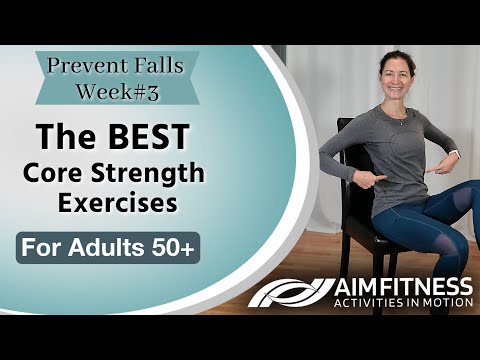
Core Strengthening Exercises for Fall Prevention in Seniors
9-minute workout video. Core, Low Impact, Floor Exercise. targeting Core, Abs. low intensity. helps with Muscle Strength, Rehabilitation / Treatment Support.
⏱️ Key Moments
Is this workout right for you?
This is a 10-minute beginner workout for older adults who want to build core strength and better balance to help lower fall risk. The exercises are done seated in a chair, so you do not need to get down on the floor. It is low intensity and low impact. The session includes a warm-up, main core exercises, and a cool down, with rest periods built in. It is listed for osteoporosis and chronic back pain, and it has a caution note for osteoporosis.
Good for
- Adults who want gentle core work they can do sitting in a chair
- People who are new to exercise or have limited mobility
- Anyone who wants to work on balance and steadiness as part of a fall prevention plan
- People who want a short session they can fit into a busy day
Check first
- Talk with your doctor or physical therapist before you start, especially if you have osteoporosis, back pain, a recent injury, or balance problems
- Check that your chair is sturdy, has no wheels, and stays in place on the floor
- Stop and rest if you feel dizzy, short of breath, or have sharp pain
- Ask for help if you are not sure whether a movement fits your body
Before you start
- Clear a space near a sturdy chair with a firm seat and back
- Wear comfortable clothes and shoes with good grip
- Keep a glass of water nearby and drink before and after
- Have a wall or sturdy table within reach in case you need extra support
Make it easier
- Use a chair with armrests so you can hold on when you sit down or stand up
- Move through the session slowly and skip any move that feels uncomfortable
- Take the rest periods in full, even if you feel fine
- Do the session with a wall or counter nearby for extra stability
When it feels easy
- Once the session feels comfortable, add more days each week before adding more effort
- Keep good posture through the whole session without rushing
- Pair this workout with a short daily walk or other light activity you enjoy
- Ask your doctor or physical therapist what the next step should be for you
If you have a health condition
Osteoporosis
This video has a caution note for osteoporosis. Many people with bone thinning do light, seated work, but the right choice depends on your bones and history. Ask your doctor before you start. Move slowly, avoid twisting or bending forward quickly, and stop if you feel pain or unsteady.
Read the full osteoporosis exercise guide →Chronic Back Pain / Disc Herniation
This video is listed for chronic back pain and disc herniation. Seated work may feel more comfortable for some people, but results vary. Check with your doctor or physical therapist before you start, especially if pain spreads into your legs, you feel numbness, or your pain changes. Stop if movement makes your symptoms worse.
Read the full chronic back pain / disc herniation exercise guide →How it fits your week
Adults are often encouraged to aim for 150 minutes of moderate activity each week. This 10-minute session is short and low intensity, so it works best as one part of a bigger plan. Many people do it on several days a week and add a walk or another activity they enjoy. Track how you feel over time. If you can increase your effort safely, you may want to add more active sessions alongside this one.
Frequently asked questions about Core Strengthening Exercises for Fall Prevention in Seniors
Can I do this workout if I have osteoporosis?▼
This video has a caution note for osteoporosis, so talk with your doctor before you start. The workout is seated and low impact, which many people find easier on the body. Move slowly, avoid sudden bending or twisting, and stop if you feel pain. Your doctor can tell you whether this kind of seated core work fits your bone health and history.
Do I need any equipment for this workout?▼
You only need a sturdy chair. The workout is done seated, so you do not need weights, bands, or a mat. Choose a chair without wheels that stays steady on the floor. If you want extra support, you can sit near a wall or counter. Keep the space clear so you can move easily during the session.
How often should I do a 10-minute core workout for fall prevention?▼
Many people start with a few sessions each week and build up as they feel ready. Since this is a beginner, low intensity workout, it is often used as a regular habit rather than a hard daily push. Rest between sessions if you feel sore or tired. Check with your doctor or physical therapist for a plan that fits your health needs.
This guide is general information written by VitalStep from the video's details, not medical advice. Ask your doctor what is right for you.
About the creator
This workout was created by AIM Fitness-Activities In Motion and is played from YouTube, so every view counts for the creator's channel. VitalStep adds condition tags, a written guide and safety notes to help you decide whether it fits your health. If you enjoy it, support the creator on YouTube.
More from AIM Fitness-Activities In Motion on VitalStep

Related Workouts
 9:35
10-minute Core Workout for Seniors to Improve Balance and Posture
Vive Health
 18:56
Scoliosis-friendly Core Blast for Back Pain Relief
The ScoliClinic Connect
 15:52
Pilates Workout for Full Body Toning in 15 Minutes
Pamela Reif
 9:17
Deep Core & Waist Pilates for Muscle Strength
Lilly Sabri
 34:06
Pilates Core Workout for Abs and Full Body Strength
Eleni Fit
 19:25
20-minute Pilates Core Workout for Lower Back Relief
MVMT With Cailin
Suitable Conditions
Therapeutic Goals
⚠️ Caution
Consult your doctor if you have: Osteoporosis