
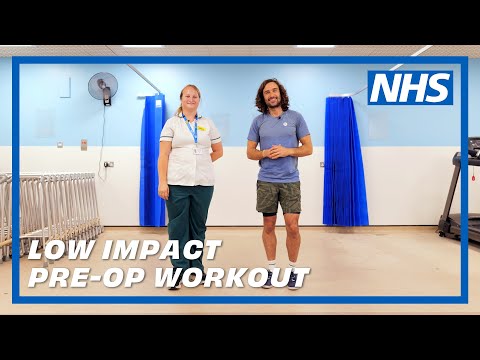
12-minute Low Impact Workout for Pre-op Patients
12-minute workout video. Low Impact, Cardio. targeting Full Body, Legs, Core, Arms. low intensity. helps with Pain Relief, Stress Reduction / Better Sleep, Cardiovascular Endurance, Muscle Strength, Rehabilitation / Treatment Support.
⏱️ Key Moments
Is this workout right for you?
This 12-minute low-impact workout is built from 10 exercises. Each one runs for 40 seconds, followed by a 20-second rest. It needs no equipment and works the legs, core, arms and full body with light cardio. It is rated beginner and low intensity, and it is aimed at people preparing for surgery. Talk with your surgical team before you start, since they know your plan and limits.
Good for
- People who are new to exercise or returning after a long break and want a gentle start.
- Anyone who wants light cardio without jumping or running.
- People who want to keep their legs, core and arms moving while they prepare for surgery.
- Readers who have no equipment at home and want a workout that fits in a short block of time.
Check first
- Ask your surgeon or care team whether this workout fits your plan before you begin.
- Check whether you have been told to limit certain activities before surgery.
- Stop and contact your doctor if you feel chest pain, dizziness or shortness of breath that does not settle with rest.
- If you have osteoporosis or rheumatoid arthritis, ask your doctor about bone and joint limits first.
Before you start
- Clear a space where you can move your arms and legs without bumping into furniture.
- Wear comfortable clothes and supportive shoes with good grip.
- Keep water nearby and have a sturdy chair within reach for support.
- Start at an easy pace and use the 20-second rest breaks fully.
Make it easier
- Use the chair modification shown in the video if standing feels hard or unsteady.
- Take longer rest breaks between exercises whenever you need them.
- Stop early and try again another day if you feel worn out.
- Sit down and pause any time you feel tired, dizzy or short of breath.
When it feels easy
- Keep a steady pace and aim to finish all 12 minutes without stopping.
- Add a second session on another day only if your care team agrees.
- Track how you feel afterward so you can judge whether the load is right for you.
If you have a health condition
Osteoporosis
This video is marked as a caution for osteoporosis. Weakened bones can make some movements riskier, so talk with your doctor before starting. Ask which movements to avoid or change. The video lists features such as avoiding spinal load and core compression, but those do not replace your doctor's advice.
Read the full osteoporosis exercise guide →Rheumatoid Arthritis
This video is marked as a caution for rheumatoid arthritis. Flare days can make joints sore, so you may need to skip or ease up on the workout. Many people with this condition find low-impact movement helpful, but check with your rheumatology team first. Stop if joint pain or swelling increases.
Read the full rheumatoid arthritis exercise guide →Chronic Back Pain / Disc Herniation
This video is listed for chronic back pain and disc herniation. It is low impact and notes avoiding spinal load and core compression. Many people with back pain can move gently, but check with your doctor before starting. Get medical advice promptly if pain spreads into your legs or you notice new numbness or weakness.
Read the full chronic back pain / disc herniation exercise guide →How it fits your week
Twelve minutes is short enough to fit into most days. Adults are often advised to aim for 150 minutes of moderate activity a week. This workout is low intensity, so it may count toward that total only if it raises your breathing a little. Most people would need to repeat it several times a week to get close to 150 minutes. Many people use it on lighter days or between other activities, as their care team allows.
Frequently asked questions about 12-minute Low Impact Workout for Pre-op Patients
Is this workout good for people preparing for surgery?▼
It is written for pre-operative patients, but only your surgical team can say whether it fits your plan. The workout is low impact and rated beginner level, which many people find easier to manage. Ask before you start, and tell them if you have been told to limit activity or have other health concerns.
Does this workout need any equipment?▼
No. The video lists no equipment, so you need only some open floor space. A sturdy chair is useful if you want to use the chair option. Wear comfortable clothes and shoes with good grip, and keep water nearby. Sit down whenever you need to.
How often can I do a 12-minute low-impact workout?▼
The right number of sessions depends on your condition and your care team's advice. Many people with mild activity limits start with one session and see how they feel the next day. If pain, swelling or fatigue grows, cut back and talk with your doctor before trying again.
This guide is general information written by VitalStep from the video's details, not medical advice. Ask your doctor what is right for you.
About the creator
This workout was created by The Body Coach TV by Joe Wicks and is played from YouTube, so every view counts for the creator's channel. VitalStep adds condition tags, a written guide and safety notes to help you decide whether it fits your health. If you enjoy it, support the creator on YouTube.
More from The Body Coach TV by Joe Wicks on VitalStep
 11:23
11-minute Kettlebell Workout for Full Body Strength
 11:08
Quick Legs, Glutes and Core Workout for Muscle Strength
 18:48
15-minute Full Body Cardio for Weight Control
 10:58
10-minute Full Body Hiit for Weight Control
 16:22
16-minute Intermediate Cardio Hiit Workout for Weight Control
 21:01
21-minute Pregnancy-safe Bodyweight Workout for Strength and Flexibility
Related Workouts
 10:31
10-minute Low Impact Full Body Workout for Seniors
Workout Guru
 10:17
10-minute Cardio Workout for Improving Blood Circulation in Legs
Roberta's Gym
 21:43
20-minute Low Intensity Interval Training for Active Recovery
Kaleigh Cohen Cycling
 12:26
Standing Morning Pilates for Full Body Toning and Flexibility
Eleni Fit
 0:21
Calisthenics at Home for Full Body Strength and Flexibility
Meli
 23:59
Full Body Pilates Burn Workout for Flexibility and Muscle Strength
growingannanas
Suitable Conditions
Therapeutic Goals
⚠️ Caution
Consult your doctor if you have: Osteoporosis, Rheumatoid Arthritis